
The Perfect Storm Brewing
Japanese Carry Trade Unwind, Nvidia Earnings, and Market Volatility in February 2025

As of Monday, February 24, 2025, financial markets are teetering on the edge of a potential perfect storm, driven by a confluence of macro dynamics, corporate earnings, and liquidity pressures. The U.S. stock markets are showing mixed signals—while the Dow Jones Industrial Average ekes out a slight gain of less than 0.1%, the S&P 500 and Nasdaq Composite are down 0.5% and 1.2%, respectively, following last week’s steep declines. Bitcoin and cryptocurrencies are also sliding, with Bitcoin dipping from its recent high of $108K to below $91K at the time of writing, amid heightened volatility. Meanwhile, Japanese government bond (JGB) yields climbed to 15-year highs before coming down, and the surging yen, threatening to unravel the long-standing yen carry trade. This week, all eyes are on Nvidia’s earnings report, due Wednesday, February 26, and key U.S. economic data, like the Personal Consumption Expenditure (PCE) index on Friday, February 28. These events could either stabilize or exacerbate the market’s current jitters. Let’s dive into the dynamics at play and what investors should watch for in the coming days.
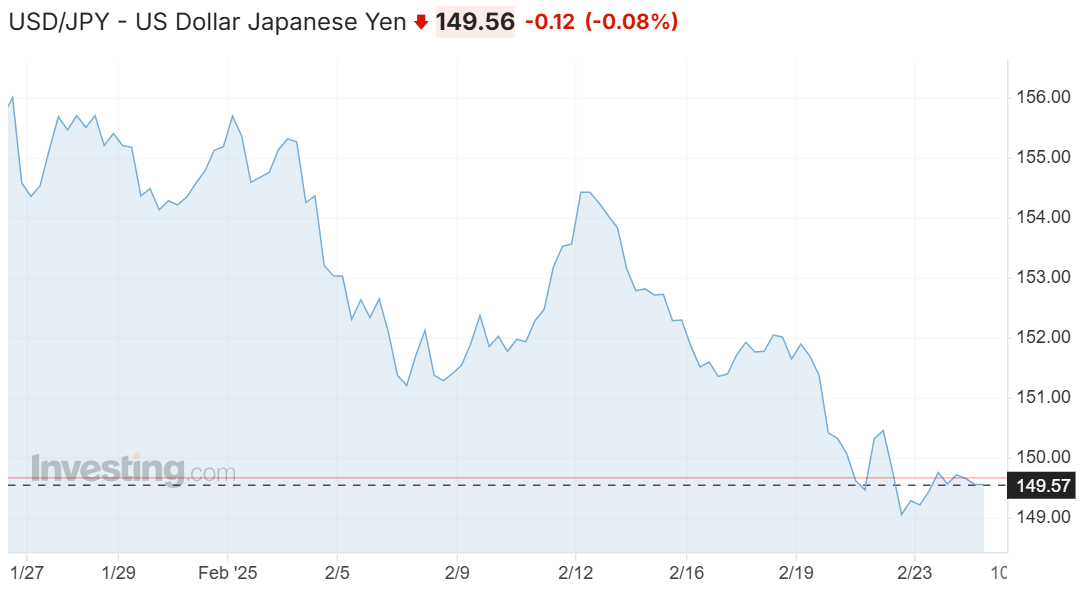
For me, one of the most significant undercurrents this week is the potential reversal of the Japanese yen carry trade, a strategy that has fueled speculative bets across global markets for decades. Historically, investors borrowed cheap yen—thanks to Japan’s ultra-low interest rates— to invest in higher-yielding assets like U.S. stocks, cryptocurrencies, and emerging market equities. With the Bank of Japan (BOJ) raising short-term rates to 0.5% in January and signaling further tightening, the yen has strengthened significantly, up 6% recently and nearing a six-week peak at 149.50 per dollar. Simultaneously, the 10-year JGB yield climbed to 1.44% (before coming down to 1.36%), its highest in 15 years, as the BOJ scaled back bond purchases to 4.5 trillion yen monthly, targeting 3 trillion by March 2026.
But the rising yen and higher yields are pressuring the carry trade. As the yen appreciates and yields rise, the cost of holding leveraged positions funded by borrowed yen increases, forcing investors to buy back yen to repay loans. This creates a feedback loop: a stronger yen drives more selling of risk assets, deepening market volatility. A reverse carry trade unwind could trigger $500 billion to $1 trillion in global selling pressure, according to estimates based on Bank for International Settlements (BIS) data on carry trade exposure. The August 2024 unwind, when the yen surged 12% in a month, offers a precedent, wiping out $500 billion in equity value and spiking volatility across asset classes.
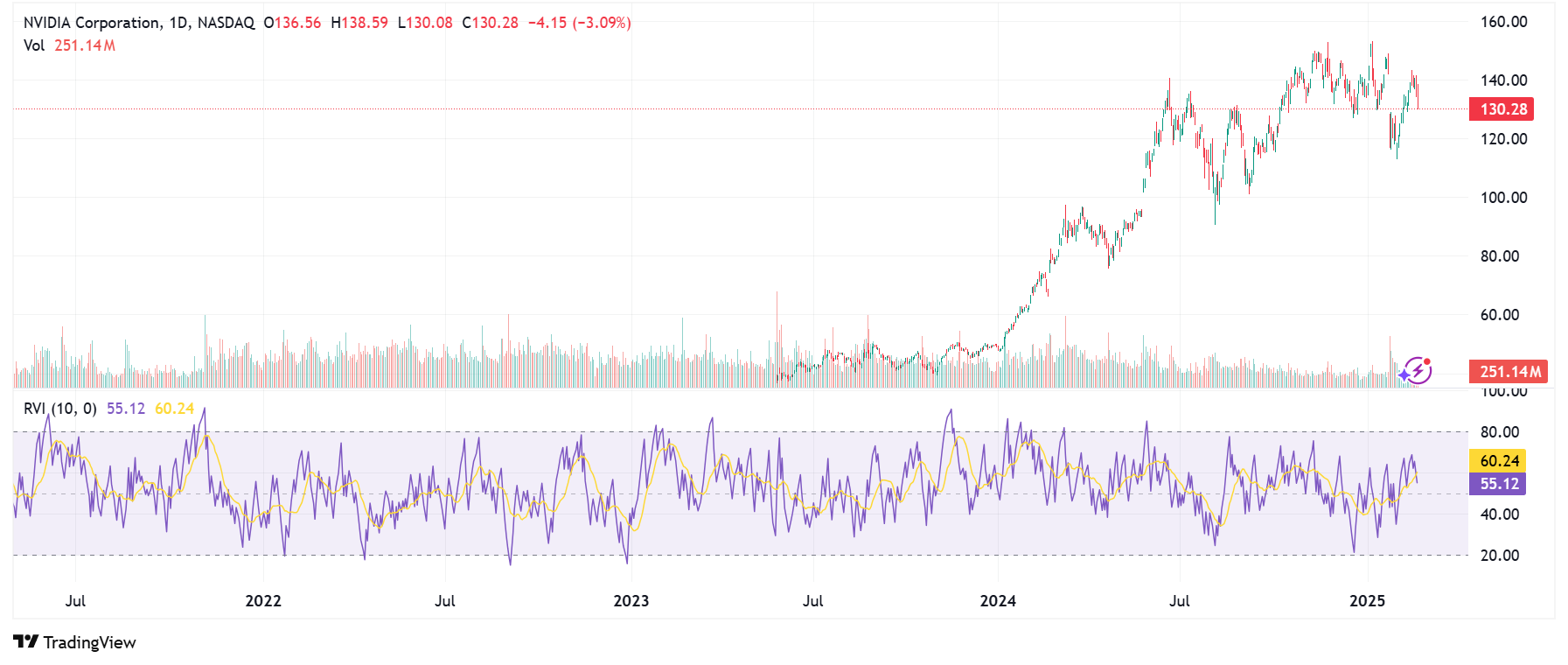
Adding fuel to the fire is Nvidia’s earnings report, scheduled for after the market closes on Wednesday, February 26, 2025. Nvidia, with a market cap of $3.2 trillion, is the world’s second most valuable company after Apple and a linchpin of the AI-driven rally that’s propelled the S&P 500 and Nasdaq higher. Wall Street expects revenue of $38.1 billion for the quarter, exceeding management’s guidance of $37.5 billion, with earnings per share (EPS) of $0.78, up 110.81% year-over-year. Analysts are also focused on Nvidia’s guidance for the upcoming quarter (Q1 2025) and longer-term commentary, with market projections suggesting revenue could reach nearly $42 billion for Q1 2026—a figure based on analyst models anticipating continued AI-driven growth, though Nvidia typically provides guidance only for the next quarter.
Nvidia’s stock has soared 171% in 2024, drawing heavy speculative bets, including leveraged ETFs like GraniteShares 2x Long NVDA Daily ETF, which saw $1 billion in inflows during a single-day drop last month. Options market data prices in a 7.7% to 12.5% swing post-earnings, translating to a $260 billion to $425 billion market cap shift. A weak report—missing consensus or guiding below expectations—could trigger a 5% to 10% drop in the stock, or more if AI growth fears intensify. This would hit leveraged players hard, potentially forcing $1 trillion to $2 trillion in selling across Nvidia, correlated tech stocks, and index funds if margin calls and stop-losses kick in.
The broader market impact could knock 0.6% to 1% off the S&P 500 and 2% to 3% off the Nasdaq 100, given Nvidia’s 6%+ weighting in the former and 8% in the latter. Combined with the yen carry unwind, a disappointing Nvidia report could create a double whammy, pushing volatility (VIX) above 20 from its current 16-ish level.
Beyond Japan and Nvidia, U.S. economic data this week could either calm or amplify the storm. The PCE index, the Fed’s preferred inflation gauge, is due on Friday, February 28, 2025. With core PCE expected to rise 0.3% month-over-month, any upside surprise could reinforce inflation worries, pushing Treasury yields higher (currently at 4.5% for the 10-year) and tightening financial conditions. This would further pressure risk assets, especially if the Fed signals fewer or no rate cuts in 2025, keeping the federal funds rate at 4.25%–4.5%.
Liquidity conditions are already neutral-to-tight. The Fed’s balance sheet is shrinking, M2 money supply growth has stalled, and bank lending remains cautious, with credit spreads narrow but borrowing costs elevated (mortgage rates near 7%). If government spending cuts - proposed by the Trump administration in collaboration with Elon Musk’s DOGE - gain traction, they could reduce fiscal support, exposing economic weaknesses masked by past outlays. A rolling recession, where sectors like manufacturing and housing lag despite solid GDP (2.3% in Q4 2024), could become more visible, prompting markets to reprice growth expectations downward.
What to Watch For This Week
Investors should brace for heightened volatility. Here’s what to monitor:
Nvidia Earnings (Wednesday, February 26): A beat on revenue ($38.1 billion) and EPS ($0.78), plus strong Q1 2025 guidance, could stabilize tech and broader markets. A miss or cautious outlook could trigger a sell-off in Nvidia and related stocks, amplified by leveraged positions.
Yen Dynamics and Carry Trade Unwind: Watch USD/JPY— if it falls below 145, expect accelerated selling in U.S. equities and crypto as the reverse carry trade intensifies. BOJ statements on rates or bond purchases could be pivotal; intervention to cap yen strength might calm markets, but inaction could deepen the unwind.
PCE Index (Friday, February 28): A core PCE print above 0.3% could push yields to 4.75% or higher, tightening financial conditions and pressuring growth stocks. A softer print might signal room for Fed easing, offering relief but potentially triggering a dollar sell-off.
Market Sentiment and Volatility: The VIX could spike to 20+ if Nvidia and the yen unwind align, testing investor resolve. Watch for forced selling in leveraged ETFs and crypto, especially if Bitcoin falls below $90,000 or major tech names like Apple and Microsoft follow Nvidia lower.
Conclusion
This week’s market dynamics—centered on a Japanese yen carry trade unwind, Nvidia’s earnings, and U.S. inflation data—could either mark a turning point or a temporary blip in the bull market. The interplay of rising Japanese yields, a strengthening yen, and potential tech sector weakness creates a volatile cocktail, while liquidity constraints and fiscal policy shifts add further uncertainty. Investors should stay nimble, monitor these key data points, and prepare for sharp moves in both directions. Whether this storm clears or escalates will hinge on the outcomes of the next few days—but one thing is clear: the cracks in the market’s foundation, long papered over, are showing.