
American Etatism

“Life is to be lived, not controlled; and humanity is won by continuing to play in face of certain defeat.” ―Ralph Ellison
As President Trump continues to reshape the world to his will, he is doing so while leveraging the system to his needs. This has already attracted criticisms of abuse of power and subversion of democracy. What is often left unquestioned is whether the system in itself is designed for abuse of power and subversion of democracy. Perhaps, what we are encountering is not changing of the tides but a veil being lifted. The veil of democracy, rules based order, and free markets. Nothing screams the lifting of the veil more than the economic paradigm upon which Trump is building the new America; a paradigm that resembles Etatism, but maybe with American characteristics, if you will.
This is a system where the state exercises decisive control over economic life through fiscal dominance, monetary centrality, and executive discretion. This American etatism seeks the assertion of state primacy over market mechanisms, achieved not through nationalization but through the concentration of economic power in government hands. There is history to it and it’s not simply Trump, because since 2008, we’ve seen this architecture come together piece-by-piece. I am not going to run down the 2008 crisis but financial bailouts set the trend of the primacy of Washington while quantitative easing demonstrated that monetary policy could directly allocate credit and sustain asset prices. Then came COVID and the pandemic relief confirmed that the federal government could, when necessary, replace entire sectors of economic activity. Each crisis response expanded the state's role, creating dependencies that outlasted the emergencies themselves. The state has crowded out private investment not through prohibition but through sheer fiscal mass. Private credit growth has slowed even as regulations ostensibly ease, because persistent government deficits monopolize available liquidity. Often times, politicians only need a proof of concept and with numerous failed experiments, America has arrived not at a solution but a clarity on how business must be done.
This machinery is now being extended into multiple other channels which sets the larger system quite like an etatistic economy. Sovereign wealth funds and strategic equity stakes, like the one in Intel, will give the government direct ownership positions in critical industries. Similarly, the proposed Bitcoin Strategic Reserve is also a redirection of resources on the command of the state. The fact that the Federal government has been forced into seeking refuge in digital gold is an indictment and not a cause of celebration (I still love Bitcoin). You even have export duties on technology companies like Nvidia and AMD to generate revenue streams that bypass traditional legislative appropriation, flowing directly to executive agencies. Even on tariffs, the Congress has continued in it’s tradition of abdication of duty. These mechanisms, or arrangements, blur the line between public and private, with corporate profits becoming state revenue through administrative decree rather than democratic process.
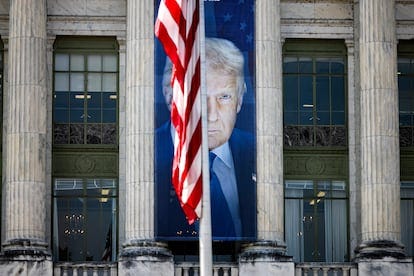
Trade policy has become the most visible expression of this transformation. The agreements with Europe and Japan represent something unprecedented in American diplomatic history with the US commanding foreign investments rather than the negotiating any mutual benefit. Europe has commited $750 billion in energy purchases and $600 billion in investments by 2028. Japan pledged $550 billion in targeted investments in it’s obeisance to the the Etatist. These are not reciprocal reductions in trade barriers but directed capital flows, mandated by tariff threats and administered through executive discretion. I do think that the constitutional implications are stark. Revenue from trade has historically flowed to the Treasury for congressional allocation, maintaining the separation of powers. Current arrangements enable targeted spending, potentially through executive agencies or specialized funds like Trump’s proposed External Revenue Service.
This is also allocation of resources that belong to another country which should make us question the state of European, Japanese, and Korean independence. Including others like Canada and UK, it is not obvious to me how these territories can claim to not be the territories of the American empire. But this is not a traditional empire like the British empire, but rather a monetary empire. Europe, Japan, Korea, Australia, U.K., Canada, and Mexico now function as economic vassals, managing local politics while surrendering strategic direction to Washington. Their forced investments constrain their fiscal space and policy autonomy, creating dependencies that extend beyond immediate trade relationships. The European Union's internal divisions and Japan's export reliance provided leverage that the American executive have exploited fully, extracting commitments that would have been unthinkable under previous administrations. These are big wins for Trump and I don’t think he is done yet.
I have been banging the door on stablecoins but I’ve only ever dealt with the financial and macro implications of stablecoins. Such implications are usually realized through political and social channels and the emergence of regulated stablecoins represents a change in the way global politics will be conducted, setting the stage for a software update on the American imperial project. Key to this will be the control over international dollars. While the Eurodollar system left much offshore dollar flow beyond Washington's direct control, stablecoins can be programmatically managed, censored, or surveilled at the protocol level. This gives the American state unprecedented leverage over global capital flows, transforming the monetary plumbing of international commerce into an instrument of policy. Digital dollars can be controlled in ways that physical currency cannot, enabling selective enforcement and real-time monitoring of global transactions. And while this is not a CBDC, and the distinction is meaningful, American empire has often perpetrated itself via the free markets. But just how the veil of American democracy is being lifted to reveal American etatism, it might be worth questioning what reality is the veil of stablecoins hiding?
So what’s purportedly a subordination of economic mechanisms and norms also draws parallels with the subordination of institutions like universities, cities, federal agencies, even the Federal Reserve become instruments of executive policy rather than independent actors. I covered the erosion of the Federal Reserve’s Independence earlier but I wanted to add a snippet:
“The Fed’s position as an independent body is also facing threats from the Treasury which is seeking to consolidate power over banking regulators, including the Federal Reserve itself. Recent reports indicate that "Treasury Secretary Scott Bessent's play for more control over US banking regulators, including the Federal Reserve, is about to enter a contentious new phase." The Treasury Department is drafting recommendations to streamline banking regulators like the Office of the Comptroller of the Currency (OCC) and Federal Deposit Insurance Corporation (FDIC), having concluded that outright mergers would require congressional approval. Bessent's ultimate agenda appears to be "claiming more control over how US banking regulators write the rules that govern financial institutions in order to make them less restrictive, including those written by the Fed." This represents a fundamental shift in the Treasury-Fed relationship.”
This is truly the Trump Doctrine. It’s not simply foreign policy or economic policy. Trade sanctions, fiscal flows, and cultural pressures merge into a single system of control where diplomatic, economic, security, and domestic policies serve unified strategic objectives. The traditional separation between these domains collapses as everything becomes subordinate to state-directed goals. This represents more than policy evolution—it constitutes a regime change accomplished through executive action rather than constitutional amendment. The American polity increasingly resembles not a voluntary federation but a centralized empire, coordinating subordinate territories through economic dependency rather than formal authority. Allies provide resources and compliance in exchange for market access and security guarantees, while domestic actors operate within constraints set by state priorities rather than market forces.
The logic is internally consistent but raises profound questions about sustainability. Etatist systems can achieve rapid mobilization and strategic coordination, but they risk institutional decay and economic distortion over time. I have supported the Trump economic agenda and I continue to believe that these policies, net-net, will help revitalize the American economy that has stagnated since 2008. But politicians do what politicians have always done—worry about the short term and forget about the long term. I will cover the long term consequences of this new system that’s being born right in front of our eyes in a future article, but when political criteria override market signals, efficiency suffers; when executive discretion replaces legislative process, democratic legitimacy erodes. The current system maximizes short-term leverage at potential long-term cost to both governance norms and alliance relationships.
American etatism emerges not from ideological choice but from the accumulated weight of crisis responses and the opportunities they created. Each intervention expanded state capacity, each expansion enabled further intervention. What began as emergency measures became permanent features of governance. The result is a system where the state exercises decisive control over economic life without formal acknowledgment of the transformation that has occurred. The implications extend far beyond domestic policy, reshaping international relations and creating pressures that other nations must navigate or resist.